
Nurturing Yogic and Sattvic Food recipes for Body, Mind, and Inner Balance
Sattvic and yogic food contribute to bringing the body, mind, and inner self into harmony. Based on the ancient yogic principles, sattvic food is all about fresh, natural, and healthy foods that include seasonal fruits and vegetables, whole grains, lentils, nuts, seeds, and herbal teas. Yogic Food Recipes. These recipes are all easy to digest, high in prana (life force), and created to support physical strength, mental awareness, and emotional balance.
Easing the nervous system and deepening mindfulness, sattvic eating steers clear of processed foods, heavy spices, and stimulants. Eating sattvic and yogic food can not only help you in yoga and meditation practice but also have a long-term impact on our health, inner balance, and help us live more consciously with peace.
The Role of the Three Gunas in Yogic Food
Basically, the food is divided into three gunas according to its ingredients, and the three gunas are:-
- Rajasic
- Tamasic
- Sattvic
The concept of the three gunas—Sattva, Rajas, and Tamas—comes from ancient yogic and Ayurvedic teachings and explains how food affects our energy, mind, and overall well-being. Sattvic food encourages purity and balance, Rajasic food increases activity and restlessness, and Tamasic food leads to heaviness and lethargy. Understanding these gunas helps people make mindful food choices that support health, emotional balance, and yogic growth.
- Rajasic food
Rajasic: Rajo Guna is energizing in effect and enhances energy, physical stimulation, activity, or restlessness of body and mind. It comprises spicy, salty, fried, and over-seasoned food like onions, garlic, and chilies, tea & coffee.
- Tamasic food
The Tamasic diet is heavy, uninteresting, and low in energy, resulting in dullness, laziness, and inertia. This includes rancid, canned, overcooked, fried foods , alcohol, and those that are fermented or kept for a long time.
- Sattvic food
Sattvic food is pure, light, and nutritious, which helps maintain balance in the body while supporting clarity in the mind. This is made up of fresh fruits, vegetables, whole grains, legumes, nuts and seeds, and milk/herbal teas. Sattvic food is light and can be easily digested by the body, which in turn always helps to have a calming effect on our thoughts, leads to a healthy mind, and saturation of prana (vital energy).
Yogic Food and Its Impact Beyond Physical Health
What we eat when we observe a yogic diet does more than affect our physical bodies; it impacts our clear-mindedness, emotional stability, and even our spiritual awareness. Yogic food, grounded in yogic philosophy, focuses on mindful eating and purity of ingredients and preparation that combine to soothe the mind and stabilize emotions. When the body is fed with clean, pure, natural, and sattvic food, it glows from within.
By eating fresh foods that are not processed or refined, men enjoy increased focus and happiness in all aspects of their lives, including yoga and meditation. Yogic food, over time, enhances self-consciousness and discipline and helps build a deeper relationship between the body, mind, and consciousness indispensable for a holistic yogic lifestyle.
Wholesome Yogic and Sattvic Food Recipes
Some examples of sattvic and yogic food recipes that are easy to make:-
Aromatic Forbidden Black Rice
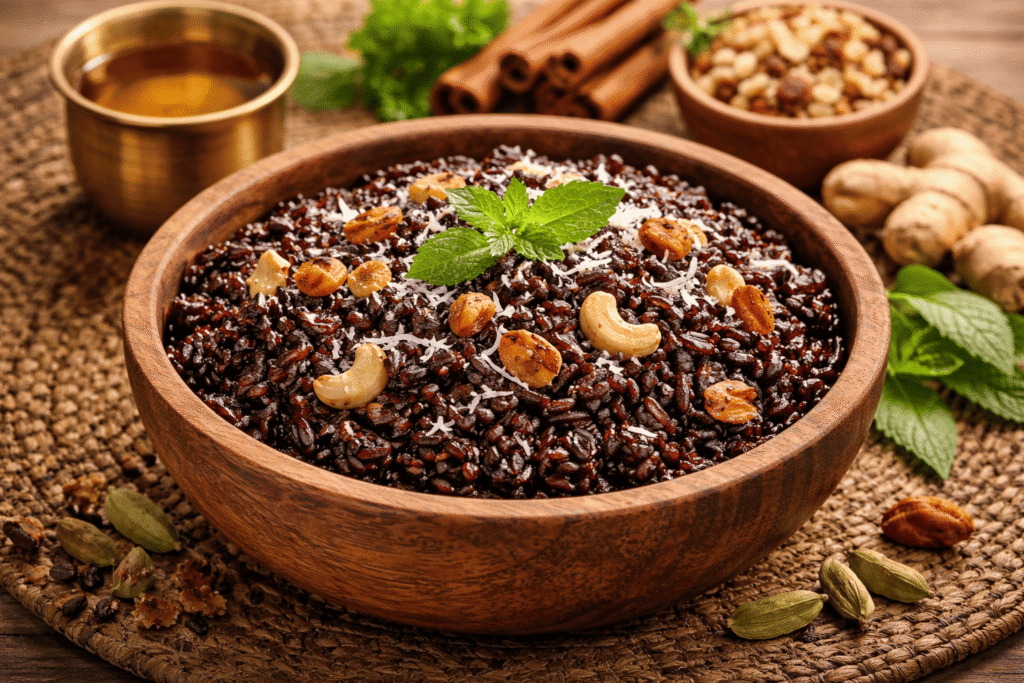
Aromatic Black Rice Natural Brown Whole Grain GMO Free, Gluten and Sodium Free. The aromatic forbidden black rice has become one of our favorite rices to cook with regularly. Naturally rich in antioxidants, including anthocyanins, it is good for the heart and overall vitality. It has a slight nutty taste and is chewy, easy to digest, making it a good choice for health-minded practitioners with a yogic or mindful diet.
Ingredients for Aromatic Forbidden Black Rice
- 1 cup forbidden black rice
- 2 cups of water (you can substitute coconut milk if you want a thicker pudding)
- 1 small cinnamon stick
- 2–3 cardamom pods
- 1 teaspoon freshly grated ginger
- 1 teaspoon ghee (plant-based option: use coconut oil)
- 1 Tbs raisins (optional, if you want natural sweets)
- 1 tablespoon of any chopped nuts, e.g., almonds, cashews, or walnuts
- A pinch of rock salt to keep the dish sattvic
- Freshly grated coconut for garnish
Instructions for Preparing the aromatic forbidden Black rice
Wash and soak 1 cup of aromatic forbidden black rice for 30 minutes. In a pot, heat ghee or coconut oil and sauté a cinnamon stick, 2–3 cardamom pods, and 1 tsp grated ginger until fragrant. Add the soaked rice and stir for 2–3 minutes. Pour in 2 cups of water (or coconut milk) with a pinch of rock salt, bring to a boil, then simmer covered for 30–35 minutes until tender. In the last few minutes, add raisins, then garnish with chopped nuts and fresh coconut. For extra sweetness, a little jaggery can be added. Enjoy this nourishing sattvic dessert.
Healing Khichdi
Healing Khichdi. You can’t get much more comforting and nourishing than khichdi in India. It is a sattvic dish because it contains everything made of vegetarian items. Spiced Rice, Lentils, and Vegetables. This easy and comforting one -pot meal with rice, lentils, and fresh vegetables is suitable for the gut as well as for anyone in pursuit of a yoga-friendly, simple, balanced diet.
Ingredients for Healing Khichdi
- 1/4 cup moong dal (split organic yellow lentils)
- 1/4 cup basmati rice (or brown rice if you want more fiber)
- 1 zucchini, chopped
- 2 carrots, chopped
- 2 celery sticks, chopped
- 1–2 tsp freshly grated ginger
- One pinch of asafoetida (hing) for digestibility.
- ½ tsp cumin seeds
- ½ tsp turmeric powder
- 1 tbsp ghee (or coconut oil for a vegan version)
- 3–4 cups water (add or reduce to achieve desired thickness)
- Salt to taste (rock salt works well for a sattvic meal)
- A pinch of black pepper
- Juice of ½ lemon, added when serving
- Fresh coriander leaves for garnish
Instructions for Preparing the Healing Khichdi
Rinse and soak rice and moong dal for 15-20 minutes. In a pot, heat ghee or coconut oil and add cumin seeds, a pinch of asafoetida, and grated ginger – sauté till it smells good. Add diced vegetables and turmeric, then stir in the rice and dal. Add 3–4 cups of water, salt to taste, and cook until all is soft and mushy (20–25 minutes on the stove top or 3 – 4 whistles in the pressure cooker). Adjust the pour to your preference. Hot, topped with a sprinkle of black pepper, lemon juice (fresh), and coriander. This healthy khichdi is a nourishing meal for your body & mind.
Sattvic Moong Dal Soup
Sattvic moong dal soup is the recipe for a yogic and nurturing dish. It’s easy on the stomach and a great source of protein, so you won’t feel heavy or weighed down. Its properties in Ayurveda are cherished for their powers to pacify the mind and balance all three doshas; ideal for yogis of every type at any time.
Ingredients for Sattvic Moong Dal Soup
- 1 /2 cup yellow moong (lentil) split golf size
- 4 cups water or more, to achieve the consistency that you prefer
- 1 tsp ghee (or for a vegan option, use coconut oil)
- 1 teaspoon cumin seeds
- 1 small piece of fresh ginger, finely grated
- A pinch of turmeric powder
- Salt to taste (or regular salt if you’d prefer)
- Fresh coriander leaves for garnish
- 1 teaspoon lime juice, added while garnishing
Instructions for Preparing Sattvic Moong Dal Soup
Wash and soak the moong dal for about 30 minutes, then cook it with water and turmeric until the lentils become soft. In a small pan, heat ghee and sauté cumin seeds and ginger until fragrant, then add this to the cooked dal. Season with salt, simmer for a few minutes, and garnish with fresh coriander and a squeeze of lime before serving.
Baked Stuffed Apple
Baked stuffed apple is a light, sattvic food recipes, and yogic dessert made with natural ingredients like fruits, nuts, and gentle spices. It satisfies sweet cravings while providing nourishment, warmth, and mental clarity without heaviness.
Ingredients for Sattvic Baked Stuffed Apple
3 medium-sized apples (red or green, preferably firm)
2 tablespoons mixed chopped nuts such as almonds, walnuts, or cashews
2 tablespoons chopped raisins or dates
1 teaspoon cinnamon powder
½ teaspoon cardamom powder
1–2 teaspoons honey or jaggery (optional, for natural sweetness)
1 teaspoon ghee or coconut oil
- A pinch of rock salt
Instructions for Preparing Baked Stuffed Apple
Preheat the oven to 180°C (350°F) and wash the apples thoroughly. Carefully remove the core while keeping the bottom intact so the filling stays inside. In a bowl, combine chopped nuts, raisins or dates, cinnamon, cardamom, a pinch of rock salt, and honey or jaggery if you prefer extra sweetness.
Stuff this mixture into the apples and place them in a baking dish. Lightly brush the apples with ghee or coconut oil, then bake for 20–25 minutes until they turn soft and golden. Serve warm, garnished with a light sprinkle of cinnamon for a comforting yogic dessert.
Kheer made with jaggery.
Kheer made with jaggery is a traditional sattvic dessert prepared using milk, rice, and a natural sweetener. Jaggery is unrefined and rich in minerals, making it a healthier alternative to refined sugar. This gentle dessert supports digestion, provides nourishment, and offers natural sweetness while keeping the body light and the mind calm.
Ingredients for Sattvic Kheer made with jaggery
- 1/4 cup rice (washed and soaked for 30 minutes)
- 1 liter milk (full cream or plant-based milk for vegan option)
- 1/4 to 1/3 cup jaggery (adjust to taste)
- 2–3 cardamom pods or 1/2 tsp cardamom powder
- 2 tbsp chopped nuts (almonds, cashews, or pistachios)
- 1 tbsp raisins (optional)
- A pinch of saffron strands (optional, for flavor and color)
Instructions for Preparing Kheer with Jaggery
Wash and soak ¼ cup of rice for about 30 minutes. Cook the rice in 1 liter of milk over medium heat until it becomes soft and the milk thickens slightly. Once cooked, add ¼–1/3 cup of jaggery, a pinch of saffron, and crushed cardamom for flavor, stirring well until the jaggery dissolves. Mix in chopped nuts and raisins, reserving a few for garnish, and let the kheer simmer for a couple of minutes so the flavors blend. Serve warm or chilled, garnished with the remaining nuts. This sattvic food recepie kheer, is naturally sweet, light, and nourishing, perfect as a gentle dessert.
Steamed Vegetable Bowl
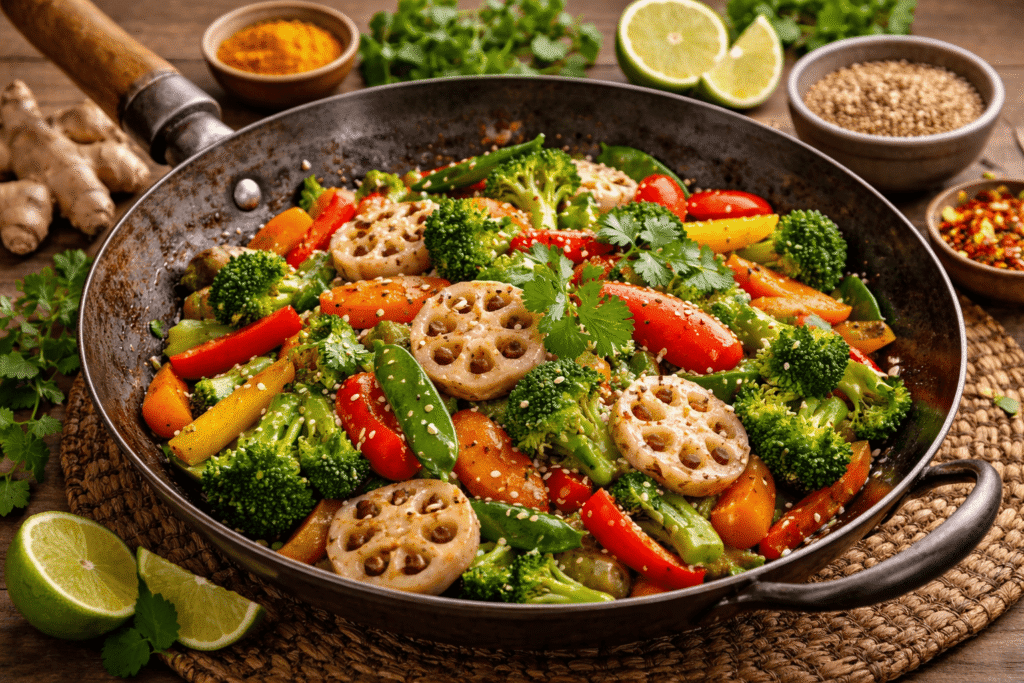
Steamed Juicy Vegetable bowl is a very basic yet healthy Sattvic food recipes, ideal for those who follow a yogic style of life! Stir-Fried Lotus Root With Peppers This stir-fry from the cookbook “Lotus” is made with fresh vegetables that are lightly cooked, so it feels healthy and has those lovely crisp-tender textures. Light and digestible, minestrone is not very high in calories, but it has plenty of vitamins and minerals as well as antioxidants.
Ingredients for Steamed Vegetable Bowl
- 1 cup broccoli florets
- 1 zucchini, chopped into cubes
- 1 carrot, sliced
- 1 cup green beans, chopped
- ½ cup cauliflower florets
- 1 teaspoon grated ginger
- 1 teaspoon lemon juice
- A pinch of salt or rock salt (sendha namak)
- Fresh coriander or parsley for garnish
Instructions for Preparing Steamed Vegetable Bowl
Peel and chop all the vegetables into bite-sized pieces. In a steamer or large pot fitted with a steam basket, bring an inch or two of water to a boil, add the vegetables and steam them for 5 to 7 minutes, until they’re tender but still crisp. Remove them from the steamer and transfer to a serving bowl, season with rock salt, squeeze lemon juice over, and sprinkle some coriander leaves. Serve hot and fresh to keep the prana and nutrients intact.
Enhance Your Yoga Experience at Soham Yoga School
Soham Yoga School in Rishikesh offers authentic, immersive yoga teacher training guided by experienced instructors. It provides a serene environment where students can deepen their practice and connect with the yogic lifestyle.
- 200 Hour Yoga Teacher Training in Rishikesh
- Best meditation and pranayama YTT
- Best Yoga Retreat in Rishikesh
Conclusion
Sattvic food recipes and the yogic diet into your life isn’t just about what you eat—it’s a way of feeding your body, calming your mind, and lifting your spirit. When you pick food that is fresh and natural, pure, and good for you, in your everyday life, it invites balance, harmony, love, and vibrance into the way you eat—not just because it benefits yoga or meditation—it benefits everything. Whether it is comforting khichdi or nourishing dal soups, sweet yet light desserts such as baked apples and jaggery kheer, sattvic food recipes make healthy eating both delicious and achievable. If you catch on to this attitude about food, you will feel great and experience more energy, peace, and every bite as something that brings your body, mind, and soul into harmony.
FAQs
What is sattvic and yogic food?
- Sattvic and yogic food is pure, natural, and light; fresh fruits, vegetables, nuts, grains such as rice or oats, and natural sweeteners. It feeds one’s body, soothes the mind, and sustains health and yoga practice.
Do yoga students eat non-veg food or not?
- Most of the Yoga students prefer a vegetarian diet (they refrain from non-veg food because it makes the body light and the mind clear, if not according to taste), but there are exceptions to all rules.
What are the benefits of eating sattvic food?
- It offers body nourishment of vital nutrients that are easily digestible. It helps mental clarity, focus, calmness, and balance, serving general health, encourages immune function, and serves a focused, energized yoga or meditation practice.